
Why Some First Nations Keep Making Progress Regardless of Who Gets Elected. And Others Keep Starting Over.
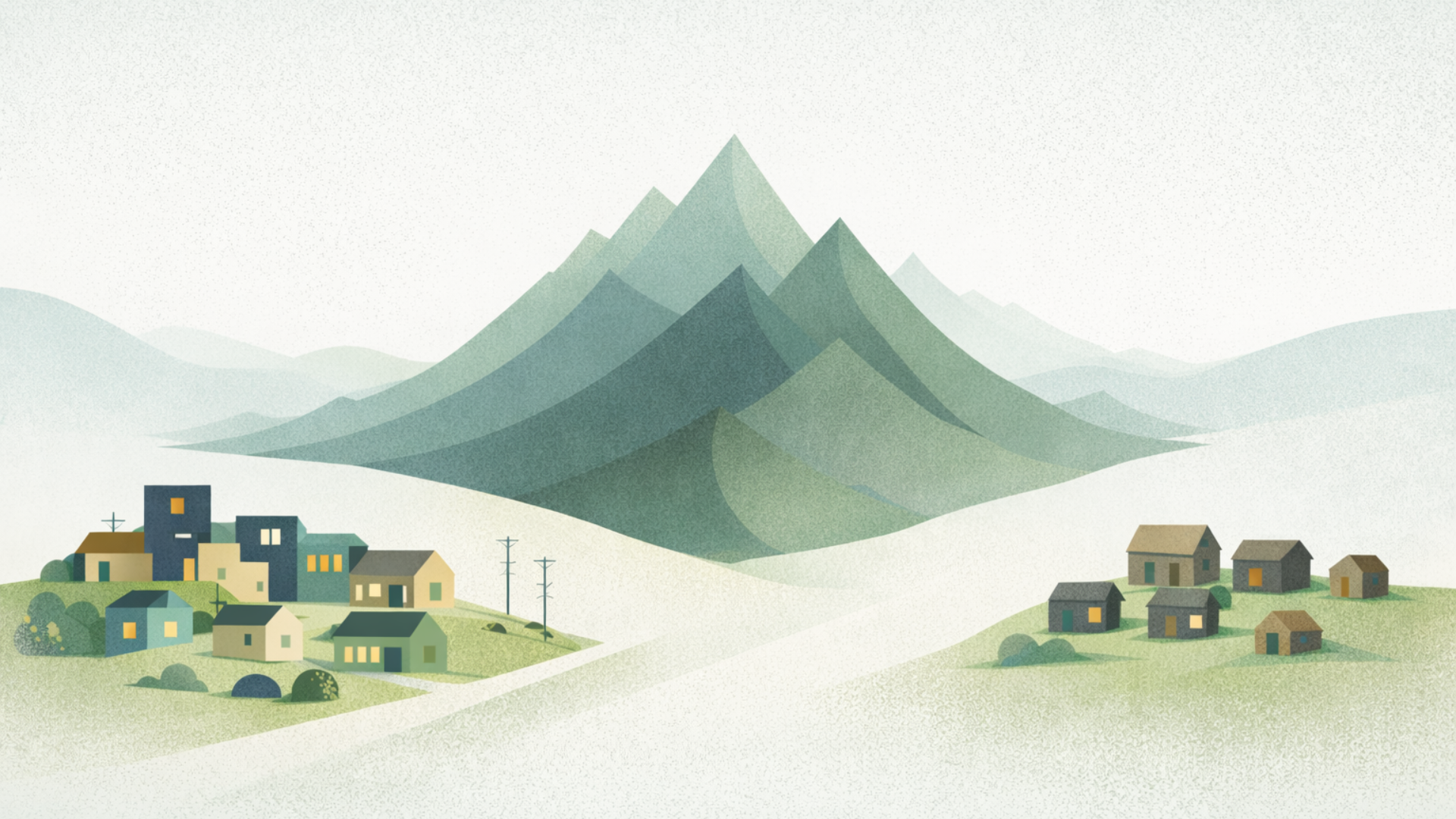
Picture two First Nations a few hundred kilometres apart. Both held elections four months ago. One has already broken ground on a housing project that council approved in its first week. The other is still dealing with the fallout from the vote, scrambling to fill three positions that were vacated the day the results came in, and hasn't held a productive council meeting since.
The difference between them isn't funding. It's not the quality of their new leadership. And it’s not geography or community size. Across Canada, First Nations governments that keep making progress through leadership transitions have built something underneath their elected government that holds the organization's knowledge, maintains operational continuity, and keeps programs and services running regardless of what happened at the polls. The ones that keep starting over haven't built it yet.
The difference, in almost every case, comes down to one thing: whether a Nation has been deliberate about how it develops, retains, and transfers knowledge among its own people.
Elections Should Change Direction. They Shouldn't Erase Memory.
In any government, an election changes who holds political authority. It doesn't empty the whole building. The people who know how the funding agreements work, who manage the relationships with federal program officers, who understand why certain decisions were made three councils ago, they're still there on Monday morning. The organization carries its own memory forward, independent of who won.
But for too many Nations, that's not how it works. A change in council can create immediate instability across the entire administrative structure. Staff who tied their sense of job security to the previous council's relationships start making decisions based on self-preservation. People with options leave. Organizational knowledge walks out with them. And an incoming council that's arrived with a mandate and momentum spends its first year trying to stabilize what it's inherited instead of governing.
It doesn't have to be this way. From what I've seen, it's usually a structural problem, and structural problems have structural solutions. The solution starts with a clearly documented, clearly understood separation between the authority of elected council and the authority of the senior administrative team. Not a vague understanding. A written framework that specifies what decisions belong to which role, what requires council approval, and how disagreements between the two get resolved. Nations that have this framework don't experience chaos after elections. They experience transition. And that's a distinction that matters once you've lived through both.
The People Who Hold Everything Together Can't be the Only Ones Who Know How Things Work.
Most Nations have at least one person like this. The Finance Manager who’s managed the funding agreements for 15 years and knows every reporting cycle by memory. The band manager who has attended every council meeting for a decade and knows the context for decisions made long before the current council was elected. The administrator who holds the relationships with the external partners that the Nation depends on.
These people are not a liability. In fact, they're often the reason a community's programs function as well as they do. The real liability is the situation where they're the only ones who know what they know. Because when they retire, resign, or get sick, that knowledge doesn't automatically transfer. Funding relationships have to be rebuilt from scratch. Reporting obligations get missed. Decisions get made without knowing some bit of history that would have prevented a costly mistake. The Nations most vulnerable to outside interference and funding dependency are often the ones where everything critical lives in one single person's head. That's not just an operational problem but a real governance risk.
The answer isn't more paperwork and documents. And it's not another software program. It lies in something Indigenous communities have always understood: knowledge belongs to more than one person, and it's passed forward intentionally. The answer is to deliberately cross-train, to build relationships between multiple people and the Nation's external partners, to identify people who could step into senior roles and develop them with enough lead time to actually be ready. None of this can be done in the final weeks or months before a senior employee leaves. It needs to be an ongoing practice built into how the organization operates, not just a crisis response triggered by a resignation letter.
In practice, deliberate knowledge transfer looks less like a formal program and more like a decision about how work gets done day to day. It means a senior administrator never manages a critical external relationship alone, there's always a second person in the meeting, on the call, copied on the correspondence. It means when a long-tenured employee does something that only they know how to do, someone younger is watching and asking questions, not as a formality but as a genuine apprenticeship. And it means the knowledge that currently lives in one person's head gets treated with the same seriousness as any other asset the Nation holds.
Your Next Senior Leader Is Probably Already Working for You.
Recruiting senior people into remote or semi-remote First Nations communities is genuinely difficult. The candidate pool is smaller. Relocation is a real barrier. Competing on compensation with municipal or provincial employers is often not realistic. First Nations who approach recruitment the same way a business in Vancouver or Calgary does will usually lose.
The strategy that actually works over time is developing people from within the community. Not because outside candidates are bad, but because the internal candidate who's worked for the Nation for five years already understands the community's history, relationships, values, and the informal dynamics better than any job posting can describe. That kind of context takes years to build. You just can't hire it.
Building this kind of internal pipeline means protecting training budgets when finances get tight instead of cutting them first. It means managers who actually know how to develop their people, not just supervise them. And it means being honest with staff about what a path forward looks like, and then supporting them along it. The Nations and communities that do this well don't just reduce their recruitment costs. They build institutions that community members recognize as their own, because the people running them came from the community and chose to stay.
Good Governance Requires Both Political and Administrative Strength. But Most People Only Talk About One.
There's no shortage of conversation about Indigenous political leadership. About vision, about rights, about the relationships between First Nations and the Crown. Those conversations are important and necessary. What gets far less attention is the administrative capacity that determines whether a First Nation can actually execute on its political direction.
A council with a clear mandate but a dysfunctional administration is still a dysfunctional government. Programs don't just run on vision alone. Funding agreements can't manage themselves. And staff can't develop and retain themselves. The administrative side of a First Nation's government is not a support function for the political side. It's the mechanism through which the political side's decisions become real outcomes for community members.
Self-determination is political, cultural, legal, and economic. But it's also administrative. The Nations that govern well in between elections, through leadership transitions, and during the disruptions that nobody can predict, are the ones that have built collective memory into their institutions rather than leaving it in the hands of individuals or the outcomes of elections. That’s the foundation that’s needed. And everything else is built on top of that.
Those two First Nations at the beginning weren't just fictional archetypes. They're a pattern that repeats itself across the land. The one that kept moving and making progress didn't just get lucky. It built something that an election couldn't disrupt, a government with its own memory, its own continuity, its own capacity to move forward regardless of what happened at the polls. The one that stalled hadn't built that yet. And here, the word “yet” matters. Because this isn't a permanent condition. It's a choice. And it can be made at any time.
About the Author: Kristi Searle, FCPHR, SHRM-SCP, CPC is the Founder and CEO of Peoplebiz Consulting and a CPHR Fellow. She is of Métis descent from Sweetgrass Nation. Peoplebiz has partnered with First Nations governments and Indigenous employers across Canada for over two decades on governance frameworks, workforce planning, and leadership development.