
The New Work Order
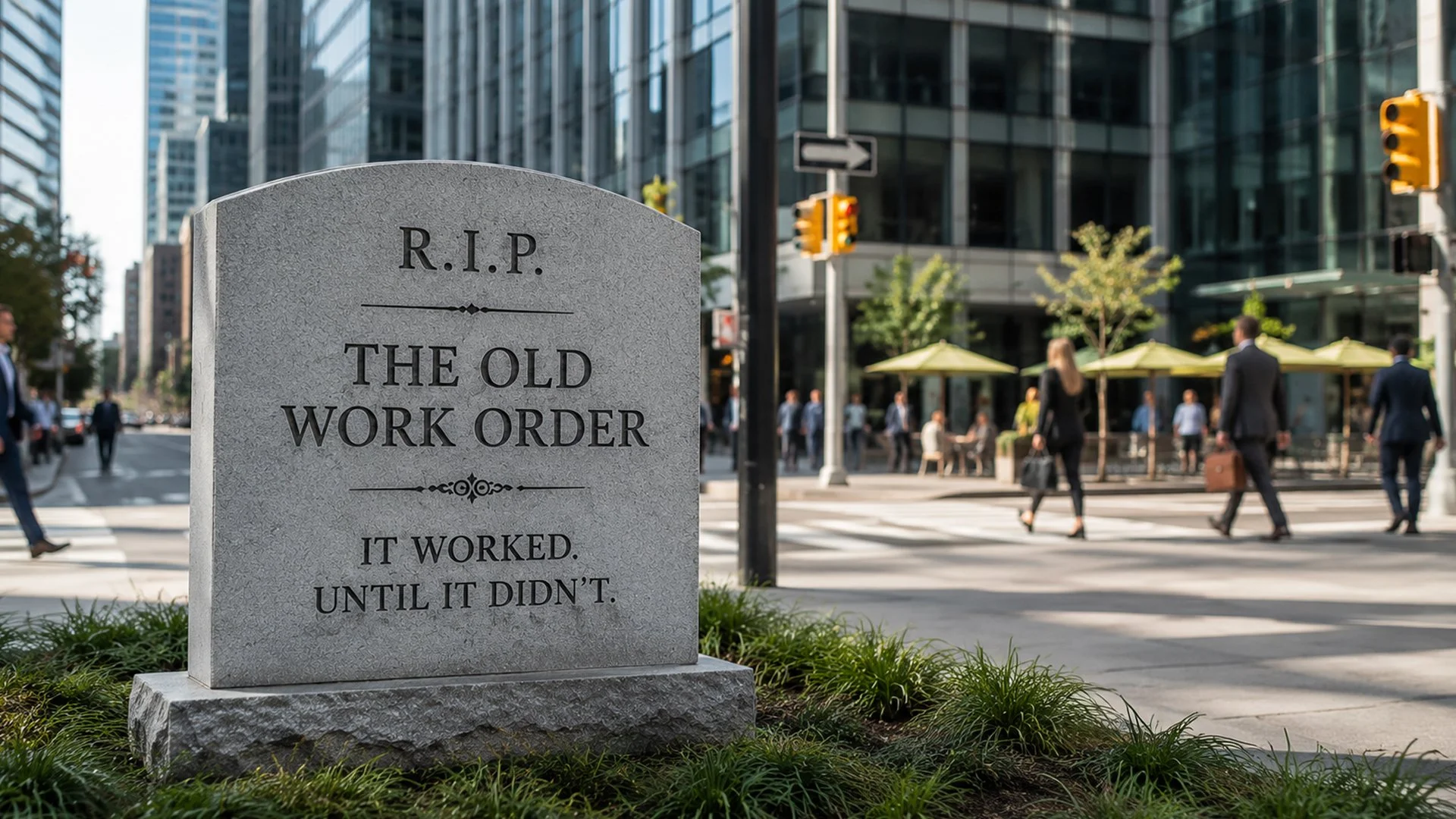
In January, Canadian Prime Minister Mark Carney stood in front of the most powerful people in the world at Davos and told them that the ‘old world order’ was dead and not coming back.
He was talking about geopolitics but honestly, the same thing has happened inside our workplaces. A lot of people just don't want to admit it.
So I will... The old work order is dead too. And we've been pretending otherwise for years.
As employers, we enforce the rules of a system that we wrote decades ago. But that system, the one we were all so comfortable with, doesn't work like it used to. It hasn't for a while. And instead of focusing on what the new system looks like, we've all been too busy searching for creative excuses to explain why "it's just a trend".
So, here's what actually died. For a hundred years, we the employers, held the power. We set the salary, the hours, the location. We decided who moved up and who stayed put. The employee's role was essentially to accept those terms, be grateful and comply. Every system we built assumes this. The performance review assumes it. The retention bonus, the counteroffer, the exit interview. The "we'll consider your request". Even last year's return-to-office mandate assumes it. All of this is, sorry-was, the machinery of an institution that was the one doing all the choosing.
That's precisely what's gone now. Why it happened is a topic for another article. What's important here is that all those assumptions are dead. They're in HR heaven.
Increasingly, people now choose their employer. They name their terms. They leave without warning and without apology, and they treat the company exactly the way companies have, for the most part, treated them: as an 'option' amongst many, kept around while it's useful. That power has flipped. The employees you probably want to keep most, not to mention an entire generation entering the workforce, have figured this out. But they're already operating on the new rules while your company keeps trying to stand by the old ones.
That's why nothing seems to work the way it used to. The mandate that was supposed to bring everyone back cost you a top employee who had three other offers within days. The raise you thought bought you a couple more years of loyalty, only got you three months. These aren't broken tactics per se, but they come from a world that no longer exists, applied to people who've already left it.
I think most employers and most HR departments know the ground has shifted. They've watched their retention program fail three years in a row. They can feel the pushback. But they, myself included at times, have been playing a blame game instead of accepting the fact that the old way of doing things is just plain gone. The things we tell ourselves also keep changing. A few years ago, it was the "lingering effects of the pandemic". Last year it was that people are lazy and pissed off about working in the office. This year, it's Gen Z.
Why can't we just admit this power has shifted? Because it means turning our back on the way things have always been. It means walking away from a system that we all remember worked. But nostalgia, as Carney put it, isn't a strategy. In fact, especially right now, it's the most expensive habit you can have.
So what does this new work order look like?
It looks like negotiating with your workforce instead of dictating to it. Like building a company where people choose to stay on the merits, not one where they feel trapped. It looks like a pay system you'd be comfortable discussed openly (because now it will) and managers who understand that their job is now to earn retention rather than just assume it. It’s transparency, sincerity and flexibility. Yes, it's harder and more work than the old way. But frankly, it's the only way it's going to work now.
The risk of not adapting to this new order? Here’s where it gets a bit grim. An employer who refuses to admit the rules have changed won’t lose everyone all at once. Instead, they’ll start to lose the ones with options and keep the ones without any. Over a few years, the people who can leave, will. The people who stay are the ones who can't. They know it and they resent it. You end up running a company with employees who feel stuck rather than employees who chose to be there. And that's not a nice place to walk into on a Monday morning.
Then there’s recruitment. Even in an employer’s market, a company known for being stuck in the past loses applicants at the top of the funnel, before anyone even applies. It doesn’t know about the résumés it never gets. So it hires from a weaker pool, which makes the internal decay worse, which makes the reputation worse. The employer keeps saying "there’s nobody good out there" and blames the labour market, when in reality, the market is simply detouring around them.
That's the environment you're left with: a building full of people who feel trapped, who've stopped speaking up, run by managers who can't figure out why the energy is gone, hiring from the bottom of the barrel and calling it a talent shortage. Not a dramatic collapse but a slow, painful hollowing that the company keeps claiming is just bad luck.
The old work order is dead and we shouldn't mourn it. But in the fracture it’s created, employers who are willing to recognize what's happened and move quickly, have a real opportunity to build something stronger than what was lost.
About the Author: Kristi Searle, FCPHR, SHRM-SCP, CPC is the Founder and CEO of Peoplebiz Consulting Inc. Over the past 30+ years, she's helped employers across North America build HR strategies that actually work: not just on paper, but in practice. Kristi is recognized as a leading voice in strategic HR and Indigenous workplace strategy, and she's known for telling it like it is.